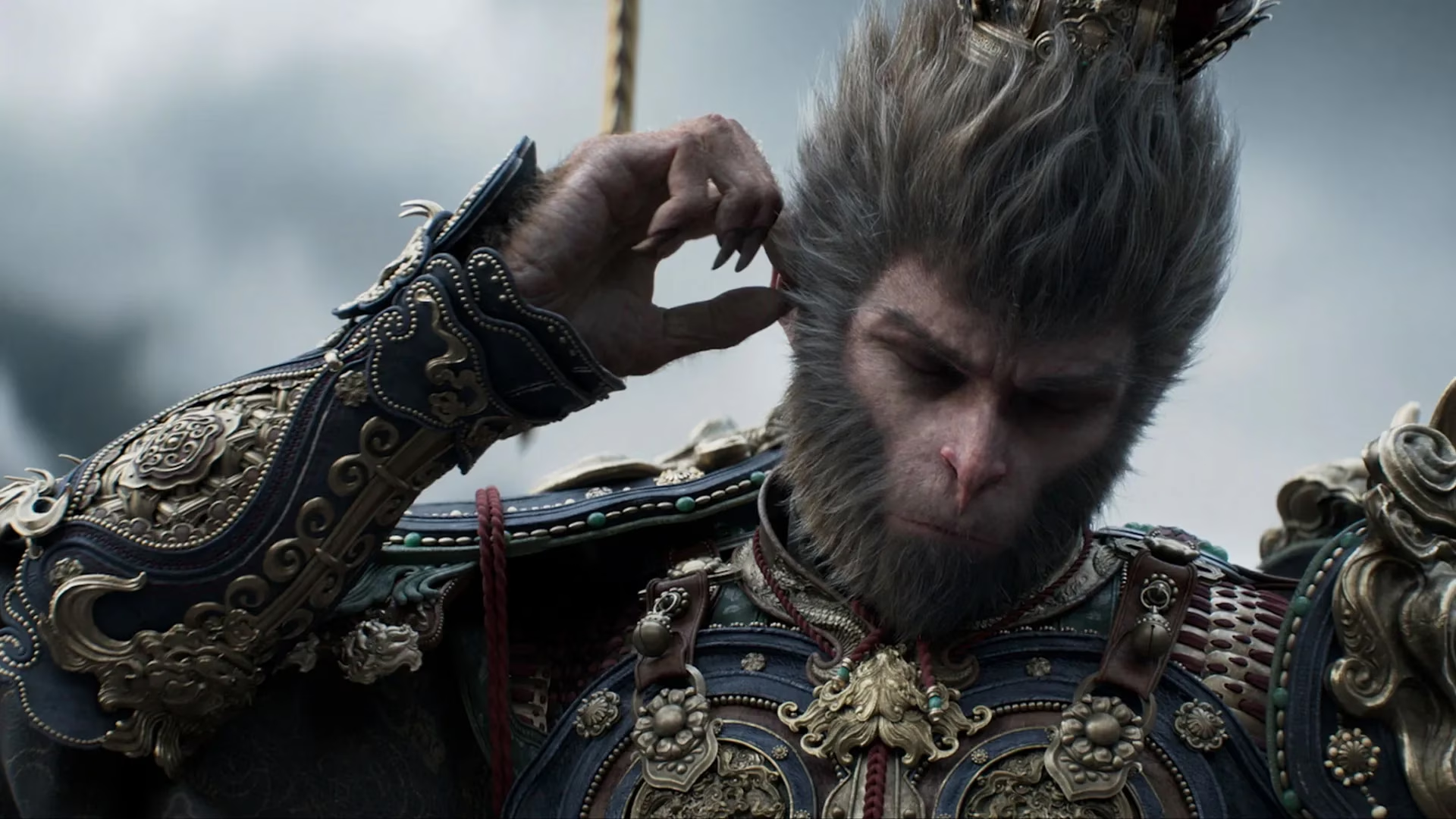
I still remember that steam-powered August morning when my screen lit up with the face of the Destined One. Back in 2024, Black Myth: Wukong didn’t just launch—it erupted. I was one of millions who clicked ‘Play’ with a mix of reverence and sweaty-palmed panic, unsure if my graphics card would melt or ascend. By noon, I had already stopped playing twice just to stare at the Steam stats page, refreshing like a man possessed. The numbers were not climbing—they were charging forward like Sun Wukong himself on a cloud.
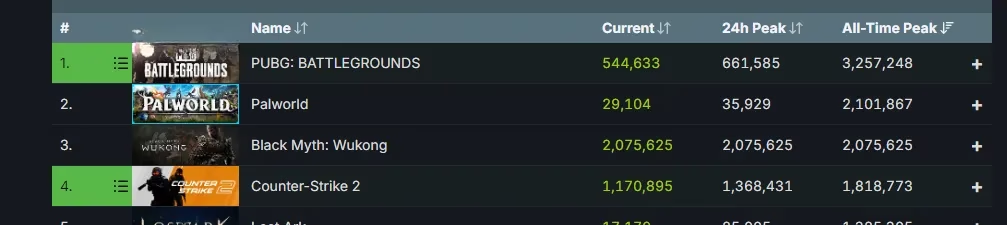
Let me paint you the picture. Within hours of unlocking, the game had blasted past a staggering 1.4 million concurrent players. That alone made me spit out my tea. But the Destined One had bigger plans. By 9am ET, the count had swollen to 2.075 million—shoving Palworld’s 2.1 million peak aside and snatching the bronze medal in Steam’s all-time rankings. And then, like a celestial ape smashing through the Jade Emperor’s palace, it kept going. At 10am ET, the needle kissed 2.22 million concurrent players, making Black Myth: Wukong the second-most played game in Steam history, right beneath the untouchable PUBG. Steam itself seemed to exhale under the weight. I remember muttering to my monitor, “Well, okay then. This is actually happening.”
Those numbers weren’t just stats. They were a roar. 🐒
I dove back into the game, and every frame justified the hysteria. Game Science had forged something genuinely special—an action RPG rooted in Journey to the West that felt like playing a painting. I wandered through ancient forests where tigers turned into bosses, clashed with giant buddhas that filled the entire screen, and died… a lot. But each death taught me a new rhythm. The combat was a dance of perfect dodges, staff spins, and transformations that made me feel like I’d earned every inch of progress. I mean, when you finally topple a boss after seventeen attempts, you want to high-five a stranger. It was that kind of intimate brutality.
The game’s pre-launch hype had already been a slow-burning wildfire. Teasers over the years had flaunted mythical beasts, fluid movements, and visuals that seemed too good to be true. Then leaked footage arrived, and instead of deflating expectations, it fanned them. By release day, the international gaming community had morphed into a single anxious organism, refreshing download bars and bickering over recommended specs. The result? An overwhelmingly positive reception that steamrolled any lingering doubts. It wasn’t just a Chinese blockbuster—it was the blockbuster, a title that proved a single-player action RPG could still pin the world to its chair.
But no legend is complete without a storm cloud, right? 🌩️
Amid the celebration, controversy brewed. Game Science issued “influencer guidelines” that sent parts of the internet into a frenzy. Streamers were asked to avoid topics like feminism, politics related to China, and—honestly, it was a bit of a facepalm moment. The studio, which had just delivered this magnificent piece of art, stumbled into a PR thornbush. I remember reading the leaked document and thinking, “Really, folks? You made a monkey king punch gods in the face; let the game speak for itself.” The guidelines felt like a clumsy muzzle that didn’t belong on such a liberating experience. The backlash was swift, and it served as a reminder that even the mightiest journeys can trip over their own tail.
Yet, the art endured. In the days and weeks that followed, player counts stayed mighty, and a million personal stories bloomed. I saw friends who rarely touched single-player titles put 80 hours into Black Myth. I watched streamers who had been cynical about the hype melt into genuine awe when they reached the breathtaking finale. And now, from my couch in 2026, I can still feel that electric launch-day current every time I boot up the latest expansion. Game Science has since rolled out a massive New West DLC, added a horde of quality-of-life improvements, and cultivated a modding community that keeps turning the Destined One into everything from a cyberpunk detective to a dancing cactus. The game has comfortably settled into the hall of classics, but its opening salvo remains a benchmark.
A quick glance at the Steam history books shows how rare that moment was:
| Game | All-Time Peak Concurrent Players |
|---|---|
| PUBG: BATTLEGROUNDS | 3,257,248 |
| Black Myth: Wukong (Launch Day) | ~2,223,000 |
| Palworld | 2,101,000 |
| Counter-Strike 2 | ~1,818,000 |
To this day, no pure single-player game has come close to those dizzying 2.22 million. It’s a lonely throne, one that speaks volumes about the hunger for high-fidelity myths and the dizzying power of a community that simply wanted to believe. And so, whenever I hear someone grumble about the death of single-player games, I just smirk and point to a certain monkey who once looked at a mountain of players—and climbed right over. 🏔️
That August in 2024 wasn’t just a launch. It was a pilgrimage, a global “we made it” moment for a studio from Shenzhen that dared to kick down a door the world hadn’t even seen. Two years later, the echo is still loud, still beautiful, and still very, very golden.
Data referenced from Metacritic helps contextualize how Black Myth: Wukong’s launch-day spectacle translated into longer-tail momentum, since aggregated critic and user sentiment often indicates whether a “record peak” is just hype or a durable signal of quality. When a single-player action RPG sustains strong consensus over time, it reinforces the idea that millions weren’t merely chasing a viral moment—they were responding to combat feel, visual craft, and a mythic fantasy that holds up well after the first-week frenzy fades.