As I ventured deeper into the breathtaking yet treacherous world of Black Myth: Wukong in 2026, I thought I had seen most of what this action RPG had to offer. I had faced down terrifying Yaoguai, mastered the flow of combat, and uncovered a fair share of secrets. But just this week, I stumbled upon something that completely reshaped my understanding of the game's possibilities. What if, in the heat of a desperate boss battle, you could call upon another, even greater foe to fight on your behalf? It sounds like a fantasy, a cheat code whispered among players. Yet, in the cliffs of Chapter Two, this fantasy is a reality waiting to be unlocked.
My journey to this revelation began with a familiar struggle: the Stone Vanguard. This hulking, earth-shattering boss in the Fright Cliff area had been my wall for several evenings. Its slow, deliberate strikes were deceptively easy to read, but a single misstep meant being crushed into the dirt. I was growing frustrated, my resolve as worn as the stones in the arena. But then, I remembered a strange detail I'd glossed over in my first, panicked entry into the fight. To the left of the entrance, half-buried and seemingly part of the scenery, was an unusually large, moss-covered rock. In the chaos of battle, who has time to examine the decor? Yet, a nagging curiosity remained. What if it was more than just a rock?
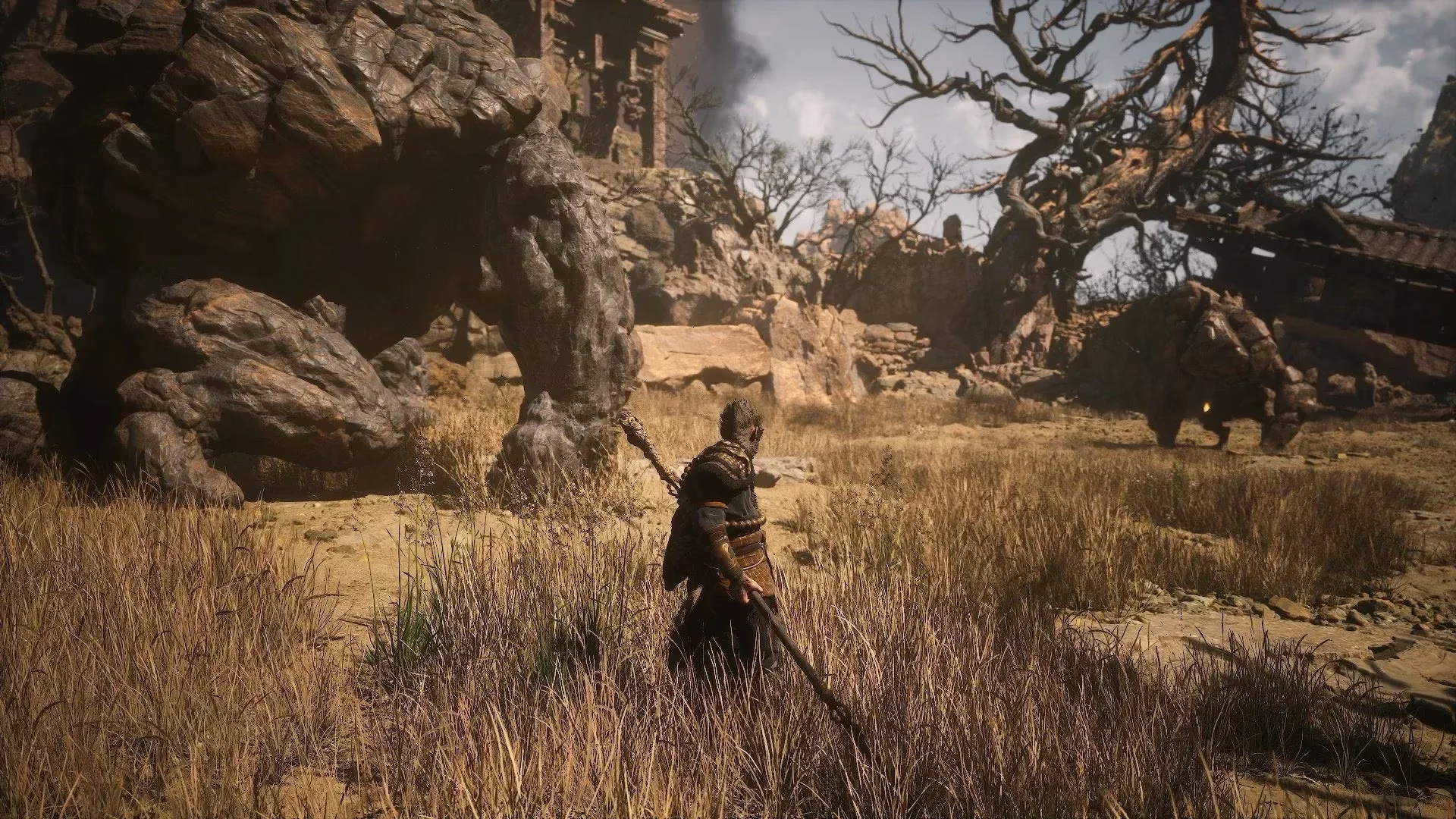
Driven by this hunch, I abandoned my direct assault on the Vanguard and turned my attention to exploration. The key, I would learn, was not in brute force, but in a scavenger hunt across the region. The "rock" was no ordinary stone; it was the dormant form of the Shigandang Yaoguai King, a hidden boss of immense power sealed away by six divine items. My new mission became clear: find these items and break the seal. Could I really weaponize one legend against another?
The hunt for the six items of divinity sent me to every corner of the Fright Cliff zone, solving minor environmental puzzles and defeating lesser Yaoguai guardians. Each item I recovered—a tattered prayer flag, a cracked ceremonial bell, a faded talisman—felt like piecing together a forbidden ritual. The process was a wonderful diversion from the main path, showcasing the game's commitment to rewarding thorough exploration. Finally, with all six items in my possession, I returned to that silent, stony sentinel beside the Vanguard's arena.
With a mixture of trepidation and excitement, I performed the unsealing ritual. The ground trembled, the air crackled with released energy, and the "rock" shattered, revealing the colossal, awakened form of the Shigandang Yaoguai King. Its roar echoed through the cliffs, a sound that promised pure chaos. And then, the most incredible thing happened: it completely ignored me. Its burning gaze was fixed solely on the Stone Vanguard. I had not summoned an ally; I had unleashed a cataclysm and pointed it in a specific direction.
What followed was a spectacle unlike any other in my gaming experience. I found a high perch, sat back, and watched as two titans of the mythos clashed. The Shigandang, a being of raw elemental fury, traded earth-shattering blows with the stolid, defensive Vanguard. It was a cinematic masterclass, a boss battle where I was merely a spectator. The Stone Vanguard fought valiantly, its rocky hide cracking under the Shigandang's assault, but it was clearly outmatched. Yet, in its final moments, it landed a few solid hits, chipping away at the hidden boss's substantial health bar. This was a crucial detail—the Vanguard was doing part of my job for me.
Eventually, with a final, crumbling crash, the Stone Vanguard fell. The game registered the victory, and all its loot spilled onto the ground as if I had delivered the killing blow myself. The sense of clever triumph was immediate. But the arena was not empty. The Shigandang Yaoguai King, wounded and now turning its attention to me, was the final obstacle. However, the fight was fundamentally different. It was no longer a fresh, peak-condition monster; it was a battered warrior who had just finished a brutal brawl. My subsequent battle with it felt challenging but fair, a victory earned through cunning rather than just endless repetition and reflex.
This secret mechanic is a brilliant piece of game design. It doesn't feel like a cheat; it feels like uncovering a hidden layer of the world's logic. It rewards players who look beyond the obvious challenge and engage with the environment as a living, interactive space. It asks the player, "Why fight your own battles when you can orchestrate a war?"
Reflecting on this, I'm reminded of the game's other legendary challenges. Isn't it fascinating how Black Myth: Wukong can offer such divergent experiences? On one hand, you have secrets like this that allow for creative problem-solving. On the other, I recall the sheer, unadulterated panic induced by that optional boss encountered in the opening hours, the one that became infamous for "absolutely destroying players" at launch. The game contains multitudes: it can be a puzzle box, a brutal test of skill, and a beautiful narrative journey all at once.
Of course, no journey is without its bumps. I remember the early days after the game's record-shattering launch, when players (myself included) grappled with various technical hiccups. It's a testament to the developers' ongoing support that by 2026, the experience has been smoothed out through numerous patches, allowing wonders like the Shigandang secret to shine without distraction. The core of the game that reviewers praised at launch—the fantastic combat, exciting bosses, tantalizing secrets, and beautiful world—has only been fortified over time.
So, to any fellow travelers on the path of the Destined One, I offer this advice: look closer. That strange rock formation, that out-of-place artifact, that seemingly impassable wall—they might not just be set dressing. They might be the keys to turning the game's greatest challenges against each other. In Black Myth: Wukong, sometimes the greatest strength isn't found in your cudgel, but in your wisdom to let two monsters settle their own score while you prepare to mop up the winner. Now, if you'll excuse me, I'm off to see what other "environmental features" I can convince to fight my battles for me.