In the twilight of 2024, the Sun Wukong-inspired action epic Black Myth: Wukong had surged through the gaming world like a typhoon, smashing sales records on PlayStation 5 and PC. Yet, on the other side of the console divide, Xbox players stood on a quiet shore, watching the storm from a distance. Their boats—the Xbox Series X and its more modest sibling, the Series S—remained anchored, unable to sail into the mythic fray. As the months crawled into 2025, the silence around the promised Xbox port grew into a fog thicker than the clouds above Mount Huaguo.
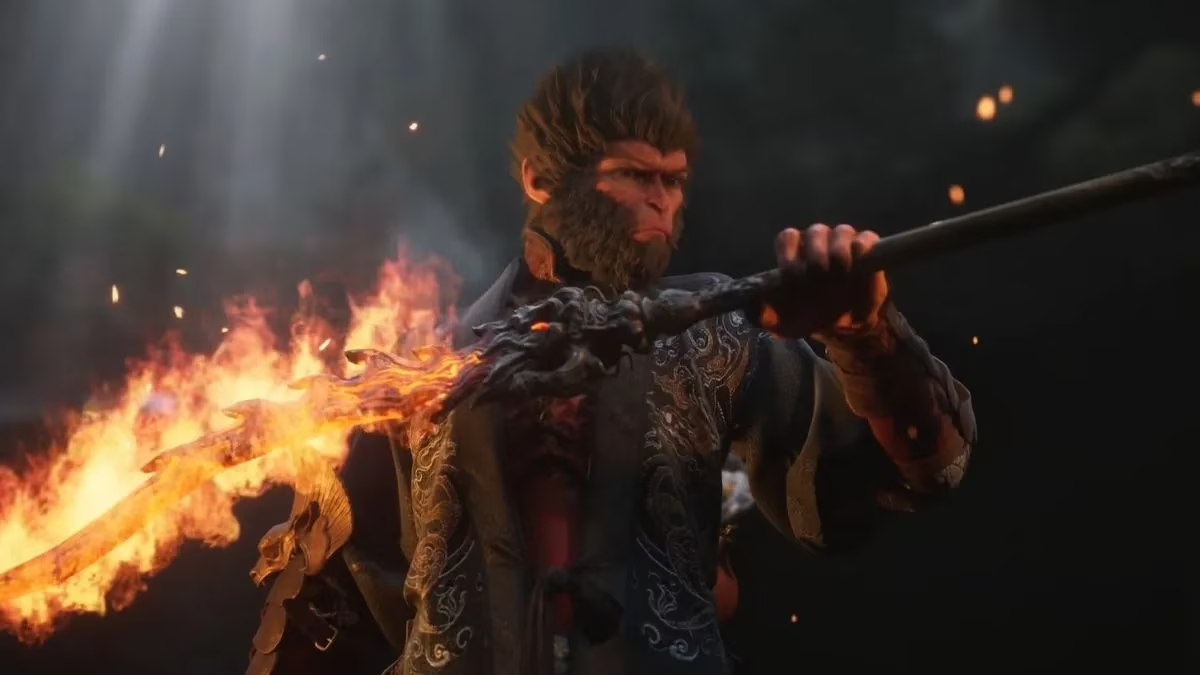
Then, in early January 2025, a bolt of clarity struck. Feng Ji, the game’s producer and director at Game Science, took to the Chinese social platform Weibo and, in a moment of unfiltered honesty, laid bare the technical Gordian knot that had been strangling the Xbox version. His words, translated across Reddit and reposted by a thousand hopeful eyes, echoed like a monastic chant: “Although there were no big surprises, I was still a little bit emotional after taking them all. Your combat capabilities are so terrifying, and the only thing missing is the XBOX… It seems a bit inappropriate, but the 10G shared memory, without several years of optimization experience, it is really difficult to use it.”
What Feng Ji had confessed was that the Xbox Series S, with its 10 gigabytes of shared memory, had become a digital Mount Tai pressing down on the game’s relocation. While the mighty Series X could flex the same muscles as a high-end PC, the Series S mandated parity — a boon for budget-conscious players but a crucible for developers. The console’s shared memory architecture was not just a smaller toolbox; it was an alchemist’s puzzle, forcing the team to transmute the lavish Unreal Engine 5 vistas into something that could breathe inside a tighter frame, all without breaking the game’s soul. For a studio still learning the dark arts of console optimization — the PS5 version had its own notorious frame-rate stumbles — the Series S requirement felt like trying to carve a silk tapestry with a blunt chisel.
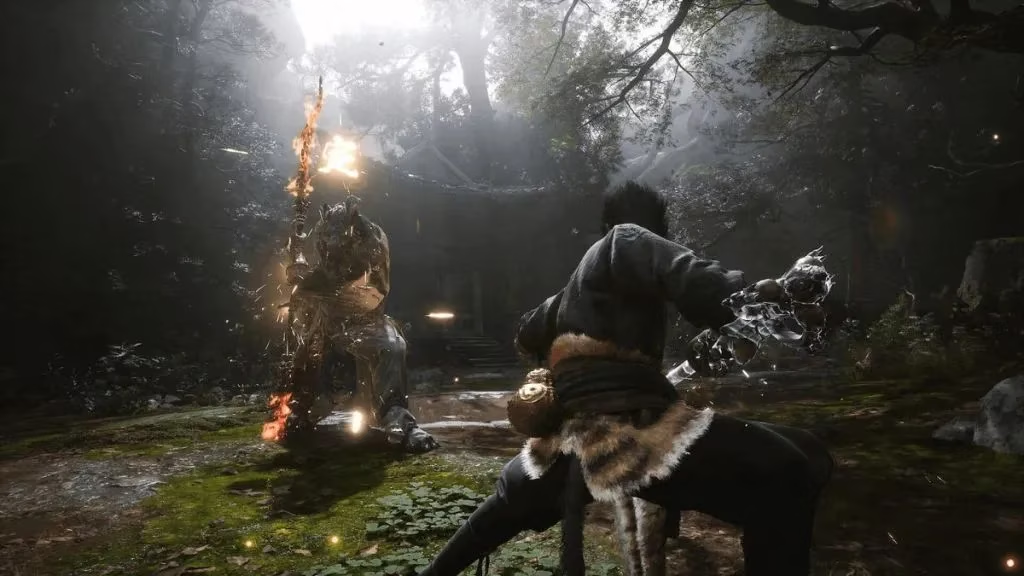
Fast forward to the early months of 2026, and the horizon has shifted. The Xbox port of Black Myth: Wukong has still not emerged from the cave of development, but it has not vanished. Feng Ji’s Weibo message, once a lament, has become the cornerstone of a patient pilgrimage. The narrative around the delay has matured: it is no longer a ghost story of corporate truces but a testament to a small team wrestling a colossal beast. Game Science, which by 2026 has grown its optimization wizards, has been sharing more frequent, cryptic updates, hinting that the shared memory hurdle is being chipped away, one grueling cycle at a time. They speak of the process as “teaching the Stone Monkey to dance on a lotus leaf” — a metaphor that captures both the grace required and the absurdity of the hardware constraint.
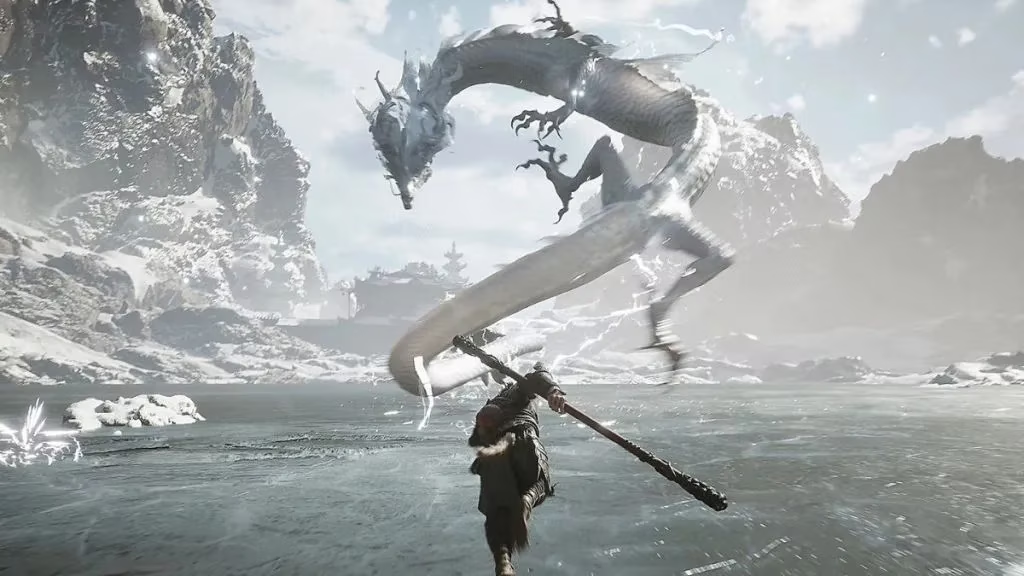
In the grand karmic wheel of game development, the Series S dilemma has become a philosophical koan. Some voices in the industry argue that Microsoft’s parity clause is a noble leash that prevents fragmentation; others, including a growing chorus of frustrated Xbox faithful, see it as a ball and chain that has kept their library from feasting on dishes like Baldur’s Gate 3, which also arrived late on the platform. For Black Myth: Wukong, the delay has turned into an unexpected proving ground. Feng Ji has admitted, in a 2026 interview during a Chinese developer conference, that the Xbox ordeal forced his team to rewrite core memory management systems — work that ultimately benefited the PC and PS5 versions with patches that smoothed out stuttering like a rake through a zen garden.
Yet the human element remains the most poignant thread. Picture Feng Ji, not as a distant CEO, but as a devoted pilgrim on a mountain path. Every line of code tuned for the Series S’s shared memory is a prostration of respect to the players who believed in his vision. The 10GB constraint is not merely an engineering problem; it is a teacher of patience, an unwitting master who demands that every texture, every particle effect, every shimmer of Wukong’s golden staff be questioned: Do you deserve to exist here? The game’s combat, a whirlwind of stances and transformations that made countless streamers gasp, must feel just as electric on a machine that costs less than a collector’s edition statue.
By the spring of 2026, the fog has thinned. Insider reports, though sparse, converge on a release window later in the year — likely autumn, a full two years after the original launch. The delay has not extinguished desire; it has fermented it into a vintage of anticipation. Xbox Game Pass subscribers discuss it in hushed, ceremonial tones, swapping theories about how Black Myth: Wukong might finally land not as a compromised afterthought but as a definitive edition, blessed with all the lessons learned from its prolonged seclusion. Game Science has even teased a new boss rush mode exclusive to the Xbox version — a small olive branch wrapped in iron, acknowledging the wait.
The story of Black Myth: Wukong on Xbox is therefore not a tragedy but an epic of endurance, mirroring the very journey of the Monkey King himself. Just as Sun Wukong bore the weight of a mountain for five centuries before his liberation, so too has this port endured the crushing pressure of technical limitation, waiting for its moment to somersault into the hands of millions. The shared memory, once an immovable rock, is slowly being carved into a launching stone. And when that day comes, when the Xbox dashboard finally glows with the destined icon, the entire saga will stand as a reminder that in gaming, sometimes the most fearsome bosses aren’t the ones on screen — they’re the ones in the hardware manual.