As I sit here in 2026, the glow of my monitor reflecting the iconic monkey silhouette that once ignited a global phenomenon, I can't help but drift back to a particular moment in early 2021. It was a time when every scrap of news about Black Myth: Wukong felt like unearthing a hidden treasure, and a certain Chinese New Year trailer dropped like a firecracker, setting the community ablaze with speculation and raw excitement. That trailer was never meant to be a slice of the final game; it was a celebratory gift, a digital firework crafted to welcome the Year of the Ox with the kind of dark, mythological flair only Game Science seemed capable of delivering. Looking back now, with three years of post-launch lore, boss rushes, and community discoveries under my belt, that short video remains a perfect snapshot of the studio's audacious vision—a vision that, against all odds, blossomed into one of the most influential action-RPGs of this decade.
Back then, Black Myth: Wukong was still largely an enigma outside of its homeland. The 13-minute announcement trailer had already stunned the world with its fluid combat and breathtaking art, but the Chinese New Year vignette showed something different: pure, unbridled creative flair. The video opened with a poetic message that, translated by Forbes, read: “As the Mouse gives way to the Ox, we have a growing talent and force. Here is a little tune for you, gamers dear, may you have a prosperous year.” The camera soon revealed a grotesque, two-headed rat monstrosity—a symbolic stand-in for the departing year that, frankly, most of us were more than happy to see brutally slaughtered. With a flurry of staff strikes and acrobatic dodges, Sun Wukong dismantled the vermin with the theatrical violence that would later become the game's signature. No sooner had the rat dissolved into embers than a hulking ox-headed behemoth rose from the smoke, its horns glinting like ominous crowns, embodying the incoming year's strength and resilience.
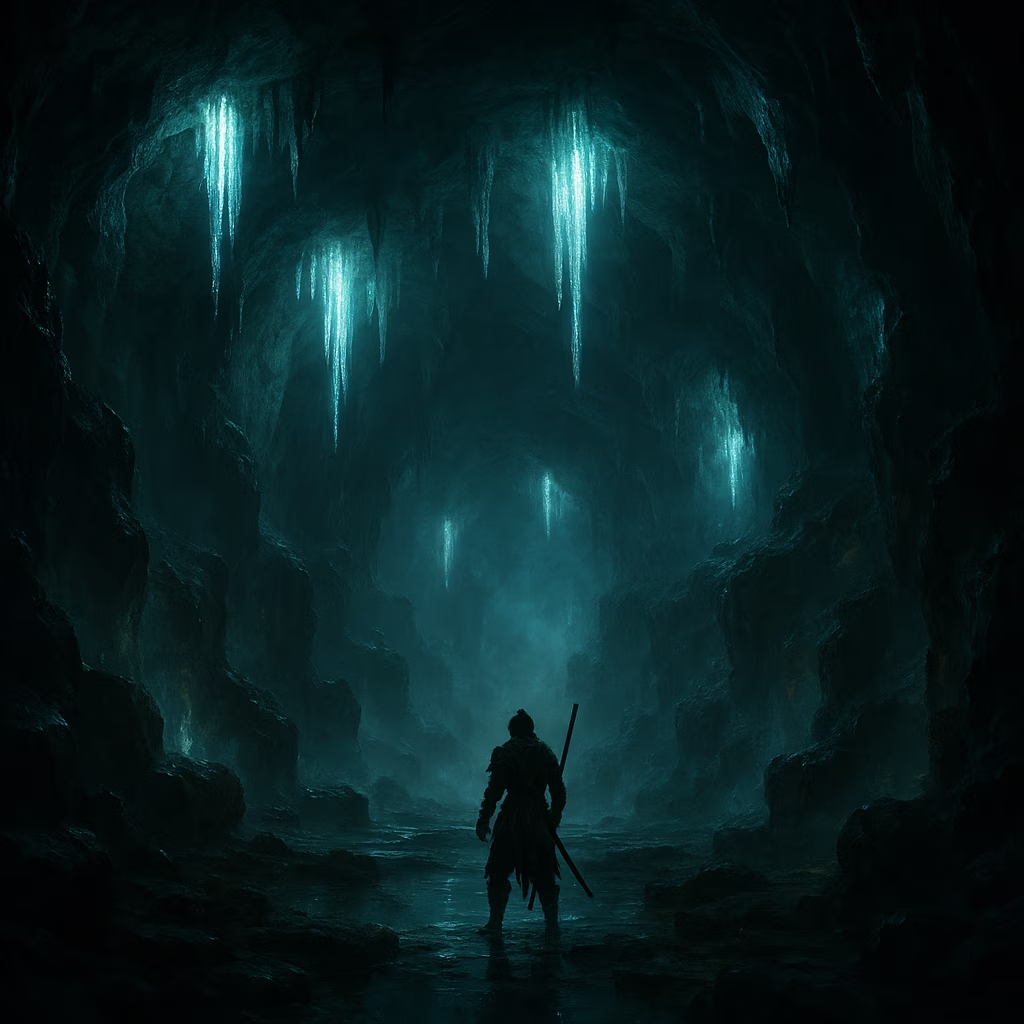
I remember replaying that transition a dozen times. The contrast between the frantic, scurrying rat and the deliberate, monolithic ox was masterful visual storytelling. The tagline that closed the trailer—“be strong like a bull”—landed with a weight that went far beyond a seasonal greeting. It felt like a promise from Game Science, an indie studio that had previously cut its teeth on the mobile strategy game Art of War: Red Tides. They were telling us they were here to charge forward, to grow their talent and force with the stubborn might of an ox. Yet they also tempered expectations with a disclaimer that these creepy Zodiac concepts were created solely for the holiday celebration and would not appear in the finished game. For many of us, that was a deliciously bittersweet twist. We were getting a taste of what a Souls-inspired journey through Chinese mythology could look like when it swung for the fences with surreal, larger-than-life beast design, even if those exact creatures were destined to remain in the trailer rather than become proper bosses.
Of course, at that time the game's release date was still a distant mirage, roughly pegged for 2023. The path ahead seemed daunting for a relatively small team aiming so high. And yet, the Ox Year trailer did more than just celebrate a calendar milestone; it crystallized the core identity of Black Myth: Wukong. That identity—where myth is not a dusty relic but a bloody, breathing ecosystem of demons and deities—carried through every subsequent showcase. When I finally got my hands on the game in the summer of 2023, I was immediately struck by how the spirit of that holiday tease had seeped into the DNA of the full adventure. The rat-to-ox symbolism never materialized as a literal boss fight, but the philosophy of transmuting fear into power, of facing a grotesque past and rising as something formidable, echoed across chapter after chapter.
Now, in 2026, revisiting that old trailer feels like decoding a premonition. The two-headed rat, with its twitching, doubled consciousness, seemed to encapsulate the fractured, uncertain year the world was leaving behind. The ox, by contrast, was a monument of forward momentum. In the final game, we encountered foes that employed similar dual-threat design—like the Twin Vanguard spirits that forced you to split your attention—and massive, ground-shaking guardians that required the patience and strategic aggression of a true bull. The combat snippets in the trailer, though clearly polished for a vertical slice, accurately predicted the rhythmic dance of perfect dodges, spell-weaving, and shape-shifting that makes Wukong such a kinetic joy. The way Wukong parried the rat's lunge with a swift stance change, then conjured a shadow clone to distract while he charged a heavy smash—those moments were not just holiday theatrics; they were a mission statement for a combat system built on player creativity and cinematic brutality.
It's also worth noting how the trailer harnessed the universal appeal of the Chinese Zodiac to build a bridge for Western audiences. Game Science understood that while the intricacies of Journey to the West might require some cultural onboarding, the concept of an animal year and its associated attributes is globally legible. By framing the video as “a little tune” for gamers everywhere, they positioned Black Myth not as a niche export but as a shared festival. This savvy cultural diplomacy, combined with the raw visual horsepower of Unreal Engine, helped the game amass the colossal hype that eventually translated into record-breaking sales and a fervent international fanbase. From my vantage point now, I can see that the 2021 Chinese New Year trailer was a masterclass in indie marketing—a micro-event that cost nothing but imagination and delivered an ROI measured in community goodwill and viral anticipation.
Reflecting on that moment, I am filled with a peculiar gratitude. So often, holiday tie-ins from games feel disposable, mere checklist items. But this one lodged itself in my memory because it dared to be delightfully weird and unapologetically sincere. The full release of Black Myth: Wukong delivered on so many fronts—labyrinthine levels, heart-pounding boss encounters that tested my patience like a true Souls veteran, and a narrative that found poetry in the monkey king's defiance. Yet that Ox Year trailer stands alone as a miniature masterpiece, a self-contained fable where a hero literally beats the old year into submission before bowing to the irresistible strength of the new. And in a meta sense, that's exactly what Game Science did as a studio: they vanquished the timid, early-access stigma often attached to debut projects and charged into a future that has, by 2026, cemented them as titans of the industry. So, as I load up another New Game Plus cycle and hear the familiar clash of my staff against a demon's hide, I silently nod to that scrappy ox from a five-year-old video. We both grew strong. 🐂✨
For readers who enjoy revisiting how short showcase trailers can shape long-term community theorycrafting—much like the way live-service action titles fuel ongoing boss and build discussions—additional commentary and update-oriented takes can be found on zzzverse, a blog hub that follows Zenless Zone Zero and the wider action-RPG scene.