In 2026, Black Myth: Wukong is no longer the tantalizing what-if that first stunned players back in 2020. It is a released, discussed, and thoroughly dissected action-RPG, and the conversation around it has shifted from whether Game Science Studio could deliver to what its legacy looks like now that the dust has settled. That makes the old reveal trailers worth revisiting, not as promises, but as time capsules. The project first made waves with a gorgeous Souls-style adventure inspired by Journey to the West, and it raised eyebrows again in 2021 when it became one of the first games to commit to Unreal Engine 5. By the time the game actually arrived in 2024, players had spent years wondering whether the spectacle would hold up. In 2026, the answer is more nuanced than a simple yes or no. 🎮
A Reveal That Refused to Be Forgotten
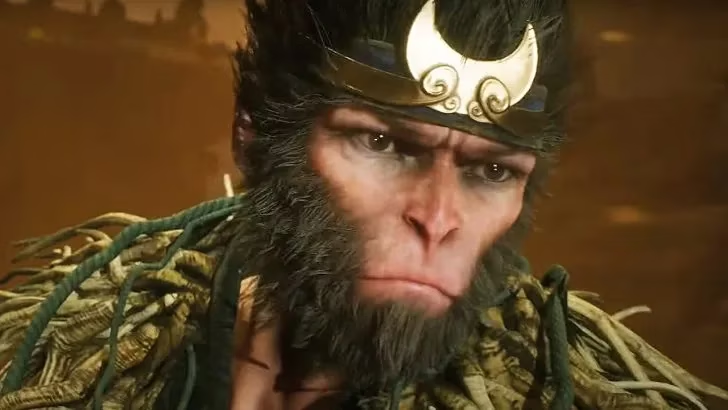
The Gamescom trailer remains a useful reference point because it captured the game’s personality so clearly. It leaned hard into boss encounters, with a giant scorpion, a tiger man, and a foe decked out in bones. The action looked intense, fast, and theatrical. Then there was the headless musician playing a tune through the chaos, a strange and memorable image that underlined how comfortably Black Myth: Wukong borrows from Chinese mythology without feeling like a simple retelling. For players who grew up with Journey to the West adaptations, those visual choices felt familiar and fresh at the same time. For newcomers, they were an invitation to lean in and ask what all of it meant. ✨
That trailer also did something important for a game built on hype: it kept the mystery alive. It showed enough combat to prove the project had teeth, but it did not explain everything. The scorpion, the tiger man, and the bone-clad rival all suggested a world packed with worthy opponents, while the headless musician hinted at a stranger, more folkloric layer beneath the fighting. In 2026, that balance between clarity and mystery still looks smart. Modern trailers often over-explain, but Black Myth: Wukong understood that a little confusion can be a feature rather than a bug.
What the Trailer Promised
The old footage focused on what looked like a series of boss fights, and that emphasis made sense. Black Myth: Wukong was always selling the fantasy of confronting mighty foes in a mythic landscape. The game’s key features reinforced that pitch. Players were told to expect a land of vast wonders, where new sights rise with every stride. They were promised powerful adversaries and worthy rivals throughout the journey. They were also told that combat would go beyond staff swings, with spells, transformations, and magic vessels combining in ways that complement and contradict one another. Those ideas are standard in action-RPGs now, but the cultural specificity gave them extra flavor. ⚔️
Another feature that stood out was the promise of heartfelt tales behind every facade. That is the kind of line that can sound like marketing fluff, yet it pointed to something important: Black Myth: Wukong wanted its monsters to be more than health bars. Beneath the ferocity and craftiness of the foes, there was supposed to be a tapestry of origins, personalities, and motivations. In a genre where bosses often exist mainly to test reflexes, that ambition mattered. It suggested that players would not only fight the scorpion or the tiger man but also uncover why they were there, what they wanted, and what they had lost. 🐒
The Feature Set That Sold the Fantasy
| Promise from the reveal | What it means for players |
|---|---|
| Explore a land of vast wonders | A Journey to the West-inspired world filled with ancient Chinese mythology, strange landscapes, and discoveries that reward curiosity. |
| Confront mighty foes, old and new | A diverse cast of adversaries, each with unique strengths, pushing players to adapt rather than repeat one winning pattern. |
| Temper mastery of varied spells | Staff techniques, spells, transformations, weapons, and equipment that can be combined to suit different combat styles. |
| Discover heartfelt tales behind every facade | Character stories that add emotional weight to battles and make the world feel inhabited rather than decorative. |
That table is a useful way to understand why the game generated so much excitement. It was not just a technical showcase. It was a package of ideas that promised scale, challenge, customization, and story. The Souls-style label helped players understand the challenge, but the Journey to the West inspiration gave the project an identity that no other major action-RPG could copy. By 2026, that identity remains one of its strongest assets. Plenty of games offer tough bosses and flashy spells. Fewer offer a world where a headless musician can sit in the middle of a boss rush and somehow feel like part of the fabric.
From Trailer to Known Quantity
The release timeline matters here. Black Myth: Wukong arrived on PC and PS5 in 2024, and the Xbox Series X/S version followed in 2025, giving players across all major platforms a chance to compare notes. That wider availability changed the conversation. In the early years, fans debated whether the game could possibly live up to the visuals. By 2026, the debate is more practical. Players talk about performance, post-launch support, balance changes, and the possibility of future content. The mystery has not disappeared, but it has moved. It is no longer about whether the game exists or whether it looks impressive. It is about how the experience holds up after the first playthrough and whether the world rewards a second visit.
Unreal Engine 5 was a major talking point in 2021, and it remains relevant in 2026, though the novelty has worn off. Players have now seen many UE5 projects, so technical spectacle alone is not enough. Black Myth: Wukong still benefits from strong art direction and memorable enemy design, but its reputation depends more on combat feel, pacing, and how well its mythological storytelling lands. That is a healthier place for any game to be. Hype can carry a project only so far. After release, the work has to speak for itself.
Why It Still Matters in 2026
Black Myth: Wukong matters because it showed how a culturally specific action-RPG could compete on a global stage without sanding down its identity. The scorpion, the tiger man, the bone-clad foe, and the headless musician are not generic fantasy decorations. They are invitations into a particular mythological imagination. For players who wanted a Souls-style challenge wrapped in Journey to the West, the game delivered a fantasy that felt both familiar and distinct. For the industry, it reinforced a simple lesson: strong art direction and a clear cultural point of view can travel further than a checklist of trends.
The game is also a reminder that hype cycles are messy. A 2020 reveal can create impossible expectations. A 2021 engine commitment can turn into a technical talking point. A 2023 trailer can revive excitement with a single bizarre image. Then release arrives, and the conversation becomes ordinary. That is not a failure. It is what happens when a myth becomes a product, and then a product becomes a known quantity. In 2026, Black Myth: Wukong is less of a rumor and more of a reference point. Developers can study its presentation, players can debate its combat, and fans can keep asking what comes next.
Final Thought
Looking back from 2026, the old trailer still holds up surprisingly well. It is intense, strange, and confident enough to let a headless musician steal a scene from a giant scorpion. The game’s key features still describe an appealing fantasy: vast landscapes, mighty foes, flexible spellcraft, and stories hidden behind monstrous facades. The difference is that players no longer have to imagine it. They can play it, critique it, and measure it against everything that has arrived since. That is the best fate any hyped game can hope for. It stops being a myth and becomes part of the conversation. 🐒⚔️