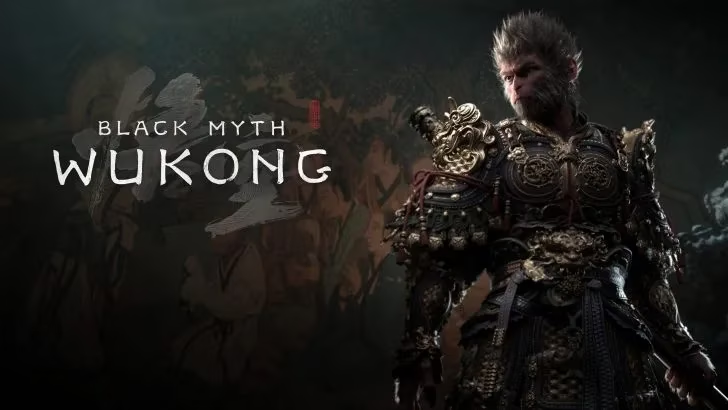
As a player who follows action RPGs closely, I still remember the way Black Myth: Wukong seemed to take over every conversation in August 2024. In 2026, looking back, that launch window feels less like a normal release and more like a cultural earthquake. Game Science announced that the game had sold 10 million copies across all platforms in just three days, with the data recorded as of 21:00 Beijing time on August 23, 2024. I have seen plenty of successful launches, but a new studio reaching that number so quickly, while also carrying the weight of Chinese mythology into the global spotlight, was something else. For me, it was the moment a regional passion became a worldwide event.
🎮 The Launch Numbers That Reframed the Conversation
The raw figures are still striking when I line them up together. They tell a story about scale, platform behavior, and the sheer force of a well-timed release.
| Metric | Figure | What I Take From It |
|---|---|---|
| Copies sold | 10 million | A blockbuster debut in roughly 72 hours |
| All-platform players | 3 million | Strong engagement beyond raw sales |
| PC players | About 2.3 million | PC, especially Steam, carried a huge share |
| Console players | About 700,000 | Consoles mattered, but were not the launch center |
| Metacritic average | 81 | Critical success, though not unanimous |
The platform split is the detail I keep coming back to. If roughly 2.3 million players were on PC and the remaining 700,000 were spread across consoles, then the launch was heavily driven by computer players. I do not think that happened by accident. The game's hype in China was enormous, and PC gaming has a deep presence there. Steam became a natural gathering point for players who had followed the project for years. For me, that split says as much about community enthusiasm as it does about hardware preference.
⚔️ Why I Think It Connected So Strongly
Black Myth: Wukong did not succeed just because it looked expensive. It succeeded because it had a clear identity. As a player, I felt that identity in almost every part of the experience.
-
Cultural roots with global reach: The game draws from Chinese culture and traditions, especially the enduring legacy of Journey to the West. That specificity did not limit its appeal; it made the world feel richer and more authentic.
-
A visual spectacle: The environments, character designs, and lighting gave the game a cinematic quality that made exploration feel rewarding. I often stopped just to look at a shrine, a mountain path, or a boss arena.
-
Staff-based melee combat: The combat system felt tactile and expressive. Swinging a staff carried weight, and the stance changes gave fights a rhythm that was easy to admire.
-
Memorable boss encounters: The game understands spectacle. Boss fights are not just obstacles; they are performances, and that is a big part of why players kept talking about them.
-
Iconic cutscenes: The presentation bridges folklore and modern action RPG design. I think that combination is why the game reached players who do not usually follow Chinese mythology.
🧐 Mixed Reactions, Real Impact
I will not pretend the conversation around Black Myth: Wukong was a chorus of identical praise. Sentiments were mixed among different audiences, and not every player agreed on every design choice. Some wanted a different pace, some debated difficulty and structure, and others simply approached it from a different action RPG background. That is normal for a game with this much attention. What matters is that the title made an impact. It pushed Game Science into a new tier of visibility and showed that a premium action RPG from a Chinese studio could dominate global charts.
A Metacritic average of 81 also fits that picture for me. It suggests a game that was widely respected, visually memorable, and mechanically ambitious, even if it was not universally considered flawless. I find that kind of reception more interesting than a perfect score, because it leaves room for discussion. Players argue about the parts they love and the parts they would change. That argument keeps a game alive.
🚀 From Launch Weekend to 2026
At the time of the announcement, the game was approaching its first weekend, so sales were expected to keep growing. There was also anticipation around a future release on Microsoft's Xbox platform. In 2026, I see those threads differently. The launch milestone is no longer just a headline; it is a reference point for how quickly a bold, culturally specific game can find a global audience. The 10 million figure remains useful because it captures a moment when curiosity, streaming coverage, and word of mouth converged.
What I find most impressive now is the durability of the game's reputation. It is not only remembered for its sales. It is remembered for its art direction, its boss design, and its willingness to treat mythology as playable material rather than background decoration. For players like me, it widened expectations for what an action RPG can look like and where it can come from.
🎯 My Player's Takeaway
When I think about Black Myth: Wukong today, I do not reduce it to a sales chart. I think about the first time the staff combat clicked for me, the way a boss reveal could make me lean forward, and the sense that I was moving through a world with its own visual grammar. The game is not flawless, but it has identity, and identity lasts longer than hype.
That is why the 10-million-copy launch still matters to me. It is not just a bragging right for Game Science. It is evidence that players will follow a confident, culturally grounded vision when the execution is strong enough. In 2026, with so many games competing for attention, that lesson feels more relevant than ever.